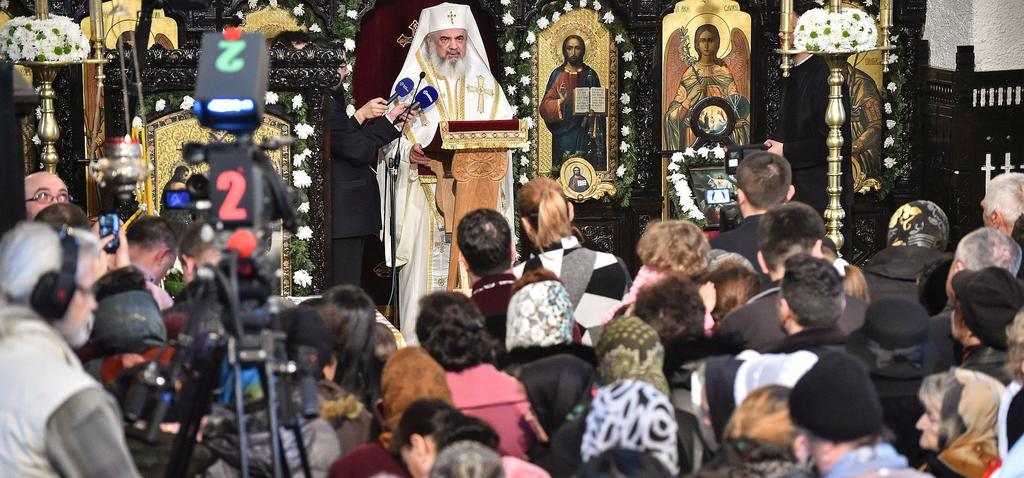
Sermon of His Beatitude Patriarch Daniel on the Sunday of the Return of the prodigal Son (text reviewed on 28 February 2016)
The soul is resurrected from spiritual death through repentance
The 34th Sunday after Pentecost (return of the Prodigal Son), Luke 15:11-32:
Jesus continued: “There was a man who had two sons. The younger one said to his father, ‘Father, give me my share of the estate’. So he divided his property between them. After he had spent everything, there was a severe famine in that whole country, and he began to be in need. So he went and hired himself out to a citizen of that country, who sent him to his fields to feed pigs. He longed to fill his stomach with the pods that the pigs were eating, but no one gave him anything. “When he came to his senses, he said, ‘How many of my father’s hired servants have food to spare, and here I am starving to death! I will set out and go back to my father and say to him: Father, I have sinned against heaven and against you. But while he was still a long way off, his father saw him and was filled with compassion for him; he ran to his son, threw his arms around him and kissed him. The son said to him, ‘Father, I have sinned against heaven and against you. I am no longer worthy to be called your son.’ “But the father said to his servants, ‘Quick! Bring the best robe and put it on him. Put a ring on his finger and sandals on his feet. Bring the fattened calf and kill it. Let’s have a feast and celebrate. For this son of mine was dead and is alive again; he was lost and is found.’ So they began to celebrate. Meanwhile, the older son was in the field. When he came near the house, he heard music and dancing. So he called one of the servants and asked him what was going on. ‘Your brother has come,’ he replied, ‘and your father has killed the fattened calf because he has him back safe and sound.’ Your brother has come,’ he replied, ‘and your father has killed the fattened calf because he has him back safe and sound.’ But he answered his father, ‘Look! All these years I’ve been slaving for you and never disobeyed your orders. Yet you never gave me even a young goat so I could celebrate with my friends. But when this son of yours who has squandered your property with prostitutes comes home, you kill the fattened calf for him!’ ‘My son,’ the father said, ‘you are always with me, and everything I have is yours. But we had to celebrate and be glad, because this brother of yours was dead and is alive again; he was lost and is found’”.
It was with much wisdom and spiritual pedagogy that the Church scheduled on the second Sunday of the Triodion period to read a very edifying Gospel parable, which helps us understand how useful repentance is for our spiritual ascent to Resurrection, as elevation from sin and as joy of our meeting with Christ, the Lord, Who revealed us the merciful love of the heavenly Father.
The Gospel text of the Sunday of the Prodigal Son has a special relation with the very Sacrament of confessing and forgiveness of sins or the Sacrament of Confession,which is, in fact, the Sacrament of the reconciliation of the human being with God.
The steps of the spiritual elevation from sin, which the young prodigal followed, are the essential steps of repentance or of confession. The Gospel text of the second Sunday of the Triodion period teaches us how to repent, and especially, how great the gift and joy of forgiveness is, how wonderful is to find the lost one or see the resurrection of the one spiritually dead, and how beautiful the state of the human soul is after receiving the forgiveness of the sins.
God respects man’s freedom, even if recklessly or lustily used
The parable told by Jesus Christ, our Lord, and presented by Saint Luke the Evangelist reveals, at the same time, the power of the repentance of the sinful man, the merciful love of God-the-Father and the joy of the forgiveness of the repentant person, because the father the Gospel speaks about represents the fatherly love of God, the Father of Jesus Christ, our Lord, and our Heavenly Father.
The two sons represent two attitudes of man towards God: one of fidelity and obedience to God, namely to fulfil His will and be a firm inhabitant of His House, and another one, of alienation from God. The elder son represents the loyal or faithful man, who tries all his life to accomplish the words or commandments of God and stays close to the House of God (the Church).
The younger son represents the disorderly freedom of the lustily man, as manifestation of his sinful life. The two sons of the Gospel may represent two categories of different people, as well as two soul conditions that the same person may have in various times of his life, namely the freedom to be firm in communion with God and the freedom to alienate or move away from God.
The Gospel reads that the younger son wanted to experience freedom as alienation both from his father and from his native home. We are surprised to see that the father accepts his son’s request to receive his share of property and leave his native home, proving that God respects man’s freedom to follow his own way of life. Thus, man has the freedom to use all the energy of his life, his natural gifts or the gifts acquired from others as he wishes, and God respects this freedom, even if He knows that man can use them contrary to His divine will.
Yet, besides the respect that God shows for man’s freedom, the Gospel text of this day also shows us the drama or failure of man’s freedom as alienation from God.
When man’s freedom becomes irrational, lustily and self-destructive, God’s wisdom calls man to repentance
“The distant country” (Luke 15:13) the younger son went to represents man’s alienation from God and from the state of healthy freedom. “The distant country” is the indefinite space of oblivion and alienation of man from God and of the individual life with no spiritual landmarks, while the man who has reached this state thinks that the freedom to become lustily defines his person as mature and autonomous.
After he spent in decadence everything he had received from his father, living a depraved life, namely enslaved by passionate pleasures of the body which reduce human’s life to the biological level of the senses, the young prodigal son had to face a situation he never expected: the biological or material hunger.
The Holy Gospel says that “a sever famine took place throughout that country” (Luke 15:15).Who scheduled that “sever famine”? What was the use of famine in that “distant country”? The Gospel does not say that, but one can suppose that it was caused by a drought allowed by God, because, more often than not, when the humans’ freedom is unwise and self-destructive, God’s wisdom tries to save the sinful and lustily man, by calling him to repentance. In other words, when we do not abstain from material greed out of our own will we shall be forced to fast. In other words, God can use external material difficulties to cause an inner spiritual change of the lustily man, enslaved by material things.
Thus, “the severe famine in the distant country” often represents the trials allowed by God over the humans, not as a punishment, but as a spiritual therapy, so that man should understand that everything he materially owns is limited and temporary, including the life he lives on the earth. One can reach the threshold of death when one greed of properties and pleasures is alienated from God, the Spring of life. In this sense, man’s freedom is a freedom in relation with God’s freedom. Sometimes God allows – through His heavenly providence or merciful care for the ultimate purpose of humans’ life on earth, namely attain salvation – temporary trials and suffering, only to remind human being that the source of his existence is beyond him, in God the Eternally Alive, Who created man to live in communion of eternal love with God-the-Creator.
When “severe famine” took place in that country of freedom lived as alienation from or oblivion of God, the prodigal young man has suddenly turned from a free rich man into a poor hungry servant. After he had become a slave of the passions of the body, he became also a slave of the material poverty now. Wishing to save his biological life – because his spiritual one was almost dead – the prodigal son “went and hired himself out to a citizen of that country” (Luke 15:15), who hired him to feed the pigs.
This job was something humiliating in the old Judaic culture, because pigs were considered unclean animals. Moreover, the prodigal son who was a servant now was not allowed to supply his stomach with the pods the pigs ate. To the spiritual poverty the humiliating material poverty was now added.
It was only then that he remembered the good life lived in his father’s house, where the servants had food to spare, eating bread, while he could eat not even the pods used to feed the pigs. This is why, the young man poor and hungry “comes to his senses” (Luke 15:17). In other words, he begins to rise from the unnatural state of the alienation from God, to the natural one, of communion with God.
Sin and death are accidents or consequences of the false freedom
The text of the Gospel of this day shows us, in fact, that sin and man’s alienation from God are not natural, but unnatural conditions, even if sometimes humans become used to sin so much that sin is considered as something natural or normal, and death as a natural phenomenon.
But, from a spiritual point of view, sin and death are not natural or normal according to God’s will, but “fallen nature”, accidents and consequences of man’s false freedom as alienation from God and falling out from the communion with Him (cf. Romans 6:13). Thus, the “coming to his senses” caused by “compulsory fasting” (famine) was the decisive chance for saving the young man who had lost his good nature. The state of crisis in his biological existence made the former reveller and squanderer young man change his thought and life, convert himself, namely to repent. Thus, after coming to his senses, when he realised he was taking a wrong path, which was not freedom but slavery, he said to himself: “I will set out and go back to my father and say to him: Father, I have sinned against heaven and against you. I am no longer worthy to be called your son; make me like one of your hired servants” (Luke 15:18-19). This sudden change of attitude of the sinner, of waking up the conscience of his own sinfulness and recognition of the unnatural state he was in, is the beginning of repentance, namely the beginning of his regret that he lived a selfish lustily life, squandering property, spiritual gifts and physical good health, having reached total moral and material decay.
When the prodigal son said “I will set out”, it meant not only getting up from the ground and leaving, but also spiritual setting out, a determination to go out of the state of decay in which he was. From that time on, the attitude of God-the-Father showed as being the merciful love that had been waiting for a long time the return of the alienated and prodigal son.
When a sinner goes towards God, God comes to meet him
In this sense, the Gospel reads: “But while he was still a long way off, his father saw him and was filled with compassion for him; he ran to his son, threw his arms around him and kissed him.” (Luke 15:20). The father of the prodigal son was not waiting for his son, who was repenting, to come home and knock at the door, but “ran to him, threw his arms around him and kissed him, as a sign of great appreciation for his repentance.
Therefore, when a sinner comes towards God and takes the first steps of repentance, God “runs” to meet him. The hands of God-the-Father, which He throws out to hug the one who repents, are the holy works of the Church of Christ, namely the call to repentance and forgiveness of sins. It is through these holy works that the sinful men alienated from God and from their fellow beings receive the salvation, if they sincerely repent from the bottom of their hearts.
Then, the Holy Gospel tells us that after the Father of the prodigal son received his repentance with joy, he ordered his servants to bring out the first robe – the best one – and put it on him, and a ring in his finger and sandals in his feet.
The first or new robe of the fatherly forgiveness symbolises the enlightenment or purification of the soul from its previous dark states imprinted by sins. This robe expresses the relationship between the Holy Sacrament of Baptism “of water and the Spirit” (John 3:5) and the Holy Sacrament of Repentance, also called “Baptism of the Tears”.
The golden ring in his finger symbolises the re-adoption through grace of the human alienated from God through sin. More exactly, the golden ring is the sign of the re-reception of the repenting man into God’s full, uninterrupted, undiminished and unchanged love,present in the holy work of the Church of Christ.
The new footwear that the prodigal son receives after repenting means the grace or help received from God in order to trample over the thorns of sinful temptations and walk on the path of salvation, namely the path of humble love towards God and his fellow human beings.
The fattened calf slaughtered for the feast of joy symbolises the Sacrament of the Holy Eucharist. This is why, all the sinners who repented and received the forgiveness of their sins, through the Holy Sacrament of Confession, are called to the Holy Divine Communion or Eucharist, by which we are given, since this world, the foretaste of the resurrection and eternal life, of the joy in the Kingdom of heaven (John 6:54).
When God forgives the sins of the one who is repenting, He rejoices because of the salvation of the sinner
The Gospel text on the Prodigal Son shows us the unlimited unconditioned love of God for the repenting sinner. The Father of the prodigal son does not reproach his son who comes back home and neither does he ask him for an inventory of the property wasted, because the soul of the man saved for eternity is more expensive than any material property. The merciful love of God, which rises above any material reason, overwhelms the justice according to which the prodigal son who squandered property had to be punished. Yet, it is just this unlimited love of the merciful father, but not deserved by his sinful prodigal son, that caused much jealousy and anger to the elder son, because he did not understand his father’s attitude. But the merciful father explains and spiritually guides his elder son, who has suddenly become unmerciful and unforgiving, telling him: “My son, you are always with me, and everything I have is yours. But we had to celebrate and be glad, because this brother of yours was dead and is alive again; he was lost and is found.” (Luke 15:31-32).
The elder son of the parable of the Prodigal Son represents certain faithful who love God and the Church, are diligent and honest, live pure life with much devotion, but who are rather often unmerciful and unforgiving towards the sinners of the community, andwho would rather morally judge others instead of helping them to improve spiritually. Because the merciful father forgives his sinful and prodigal son who repents and asks his obedient and diligent elder son to be merciful and forgiving, the text of the Holy Gospel of this day is, at the same time, a Gospel of the forgiving of the repenting sinner and of taming the unforgiving devoted person.
The parable of the Prodigal Son has become a model of repentance for all people in the life of the Church, and especially for those who want to live a monastic life. This is why the troparion of the religious service for tonsuring into monasticism is drafted as a prayer of repentance of the Prodigal Son. The content of this troparion can be also found in the Kathismas of the Matins celebrated on the Sunday of the Prodigal Son.
May the Merciful God help us learn from the parable of the Prodigal Son how great the power of the sincere repentance is, how merciful the love of God Who forgives the sins of the people is, and how uplifting is the holy joy that God gives to humble humans ever since this world. The parable of the Prodigal Son urges us to repent more for our sins and receive the Holy Eucharist more often, in order to enjoy the joy of forgiveness, the renewal of the life and the work of the grace of Christ the Crucified and Risen One in us, for the glory of the Most Holy Trinity and for our salvation! Amen!