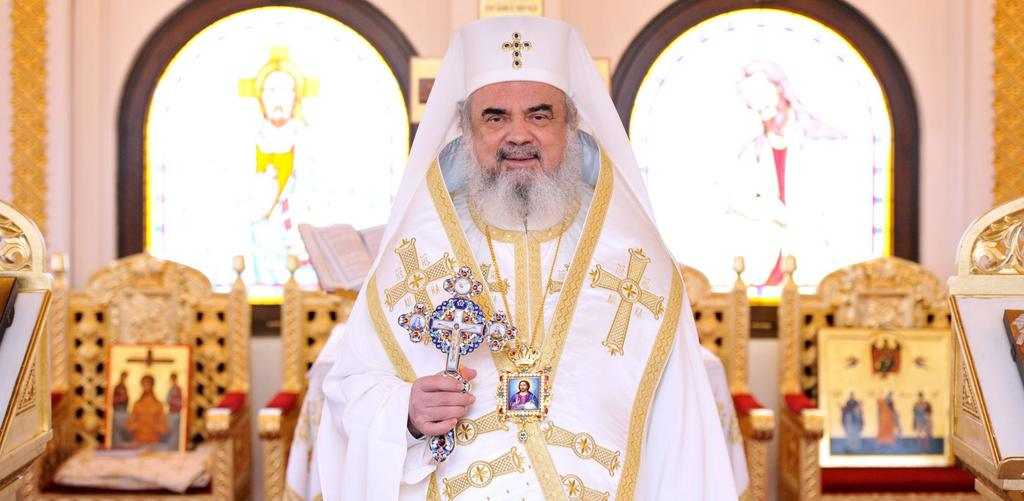
His Beatitude Daniel, Patriarch of Romania urged the Orthodox Christians to be forgiving, showing that, as Christ taught us, “forgiveness is the good beginning of the Lent”. “While forgiving others the inner humbleness and freedom of the human being willing to live in the merciful love of God are cultivated”, His Beatitude also said. The urge to be more forgiving was addressed during the sermon delivered on Sunday, 13 March 2016, in the Chapel of Saint Gregory the Enlightener of the Patriarchal Residence.
Today, in the Orthodox Church is the Sunday of the Expulsion of Adam from Paradise or ofCheese-fare, which closes the preparatory period for the Holy Great Lent marking the beginning of Lent itself. The Gospel text of Matthew 6:14-21 (see below) was read during the Divine Liturgy, showing that forgiving those who trespass is an essential condition for receiving God’s forgiveness and salvation, implicitly.
The Patriarch of Romania began his sermon showing that ”today Gospel text is a light for our soul during the entire period of Lent”.
His Beatitude Patriarch Daniel urged the Orthodox Christians to be forgiving, because as Christ taught us that “forgiveness is the good beginning of the Lent”. “Nobody can begin Lent as spiritual fight for doing away with the sins, without forgiveness”, His Beatitude underlined, “because humbleness and inner freedom are cultivated in the human being eager to live in the merciful love of God, while forgiving others”.
Forgiveness of the trespasses opens the soul to the resurrection
While referring to forgiveness, His Beatitude Patriarch Daniel showed that “we forgive other people’s trespasses in order to be in peace and communion with all humans and resemble the Merciful and Forgiving God”. Thus, as the Primate of the Romanian Orthodox Church said “man’s relationship with God depends on his relationship with his fellow human beings, because man cannot come close to God neglecting his neighbour”. In this sense, “the way and extend to which man shows love to his fellow human beings contribute a lot to building, cultivating and deepening the relationship of communion with God, the Creator of heaven and earth and the One Who loves humans”, His Beatitude has also said. Another important aspect underlined in the sermon is that “forgiving the neighbour’s trespasses often implies the crucifixion of one’s own selfishness opening the soul to the resurrection, to a new state of communication and communion of man with God and with his fellow human beings”.
We fast because we love God
The Primate of the Romanian Orthodox Church has also spoken about the motivation of fasting: “We fast because we love God from heaven, the Giver of eternal life, more than all the temporary material gifts” and “we do not fast to be praised by humans, but to come closer to God”. His Beatitude explained the fact that fasting is based on the devotion and love for the Heavenly Father having been “devotion to God as gratitude for the gift of life and as desire to improve spiritual life”, as well as “a spiritual state of sacrifice or offering of the one who fasts, a state cultivated freely and according to one’s own ability”.
If somebody is fasting but not praying, he/she does not gather light in his/her soul
The Patriarch of the Romanian Orthodox Church has also spoken about the relationship between fasting and prayer, showing that “fasting is also the sign of the desire of the religious human to rid himself of the greed for limited and temporary material things, in order to join, through more intense prayer, the unlimited eternal God, the Source of eternal life and joy”. His Beatitude explained the fact that fasting “sustains the prayer of religious human being who considers one’s relationship with God as the focus, light and food of his soul”, showing that ”if somebody is fasting, but not praying, he/she does not gather spiritual light in his/her soul”.
Next Sunday (20 March 2016), the Orthodox Church will be on the first Sunday of Lent, also called of Orthodoxy.