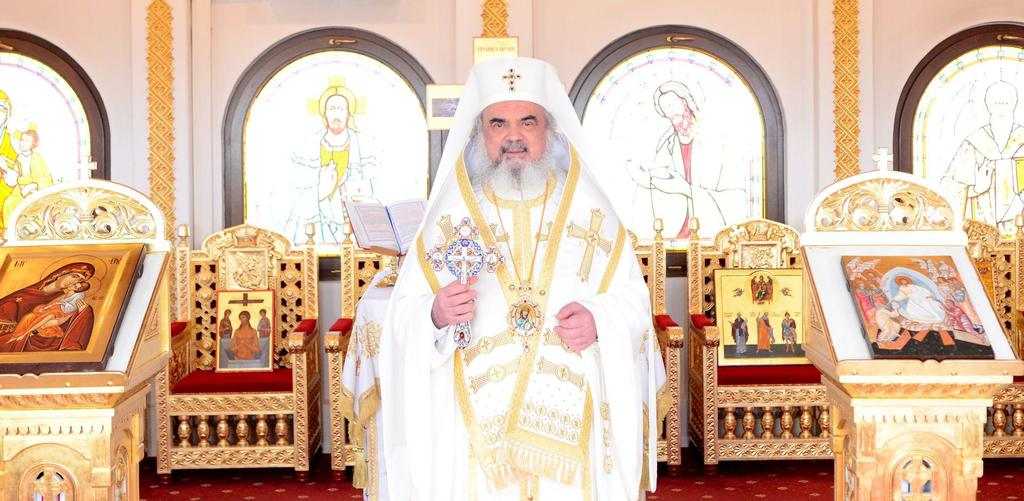
His Beatitude Patriarch Daniel, in his sermon delivered on 07 February 2016, in the Parekklession St Gregory the Enlightener of the Patriarchal Residence, referring to the Parableof the talents, emphasised the fact that God offers gifts, talents or qualities to people for their cultivation and multiplication in order to strengthen communion among people and for the benefit of the community.
The Parableof the talents
Orthodox Christians celebrated, on 07 February 2016, the 16th Sunday after Pentecost, a day in which the Church has ordained the Parableof the talents to be read during the Divine Liturgy.
The good that we do to people represents the multiplication of the talents
In his sermon, His Beatitude Daniel, Patriarch of the Romanian Orthodox Church, has said that the Gospel reading “urges people to be merciful“, and “advises everyone to multiply their talents or personal skills in order to feel the joy that Christ the Lord gives to the industrious and generous” .
The Primate of the Romanian Orthodox Church also explained the fact that the Parableof the talents refers “not only to the spiritual life, but to human life in general, to the joy of being fruitful, of developing or cultivating talents or different qualities and putting them in the service of our neighbours” and emphasised that “God does not offer the same number of talents to everyone, which means that God knows the power of each man to multiply talents and, at the same time, He wants all human beings to work together and to help those who need their help on own initiative.
The responsibility of the human being grows proportionally with the number of gifts received
His Beatitude Patriarch Daniel referring to the Parableof the talents, emphasised the fact that God offers gifts, talents or qualities to people for their cultivation and multiplication in order to strengthen communion among people and for the benefit of the community.
Therefore, we see both the concept of proportionality in the multiplication of the gifts received and the concept of plenitude in the retribution for the effort. Consequently, the joy of perfect fruitfulness is reached by both the one who received less, and the one who received more, for the latter has the duty of offering more. So, the human being responsibility grows proportionally with the number of the received gifts. Therefore, people who are less talented must not envy their neighbours who are very talented because the latter also have a greater responsibility than those with fewer talents. Regarding this, Christ showed us that there are different levels of responsibility in accordance with the talent received and with the ministry entrusted, saying: from the one who has been entrusted with much, much more will be asked”, the Romanian Patriarch said.
The multiplication of talents implies humbleness and diligence, but especially requires love of God and our neighbour
The Patriarch of the Romanian Orthodox Church emphasised the fact that “the greatest spiritual joy blessed by God is the multiplication of the gifts received from Him for the help of our neighbours”.
“This multiplication of talents implies humbleness and diligence, but especially requires love towards God and towards our neighbour. If someone’s talents are multiplied for the benefit of the human community, the gifted person brings joy to God and to his or her neighbours. So the joy from today’s Gospel represents the joy of the industrious and generous, the joy of the bearing fruit through self-giving, the joy of the one who has done much good to others, thus resembling the All Merciful God. Only this joy of doing good deeds represents the perfect joy in a person’s life and in the lifeof a human community”, His Beatitude said.
Patriarch Teoctist – a great defender of the identity of the Romanian people
On 07 February 2016 the 101st anniversary of the fifth Patriarch of the Romanian Orthodox Church, Patriarch Teoctist was celebrated. His Beatitude Patriarch Daniel said that “he will remain in the history of our Church as a great defender of of the identity of the Romanian people, of our Romanian spirituality and as a worthy and industrious servant of the Church”.
“With great emotions and piety we recall the effort of Patriarch Teoctist, during the harsh period of communism, to build and restore churches, monasteries, to defend and promote the Orthodox and Romanian spirituality. He showed a great concern in the years after 1989 when the country experienced a greater freedom than during communism. But this freedom had its downsides, because in many aspects Patriarch Teoctist suffered due to many unfair accusations. That is why he did not fully enjoyed the freedom brought by the changes of the year 1989, because many people, with a small soul and with few knowledges about the difficulties experienced by the Church during communism, have showed superficiallity and maliciousness, instead of gratitude”, his Beatitude said.
The fifth Patriarch of the Romanian Orthodox Church, Teoctist Arăpaşu, was commemorated at the Divine Liturgy officiated in the Patriarchal Parekklession St. Hierarch Gregory the Enlightener, as well as in the Patriarchal Cathedral in Bucharest.